OCC Finalizes GENIUS Act Stablecoin Rule: Jan 18, 2027 Effective Date
The OCC stablecoin rule is finalized. Analyze the GENIUS Act final rule, stablecoin issuer requirements, rewards scrutiny, and the January 2027 effective date.
Read articleWhat changes if Democrats flip the House? Explore crypto regulation shifts, subpoena risks, 7 key Senate races, and December Fed rate hike pressure.
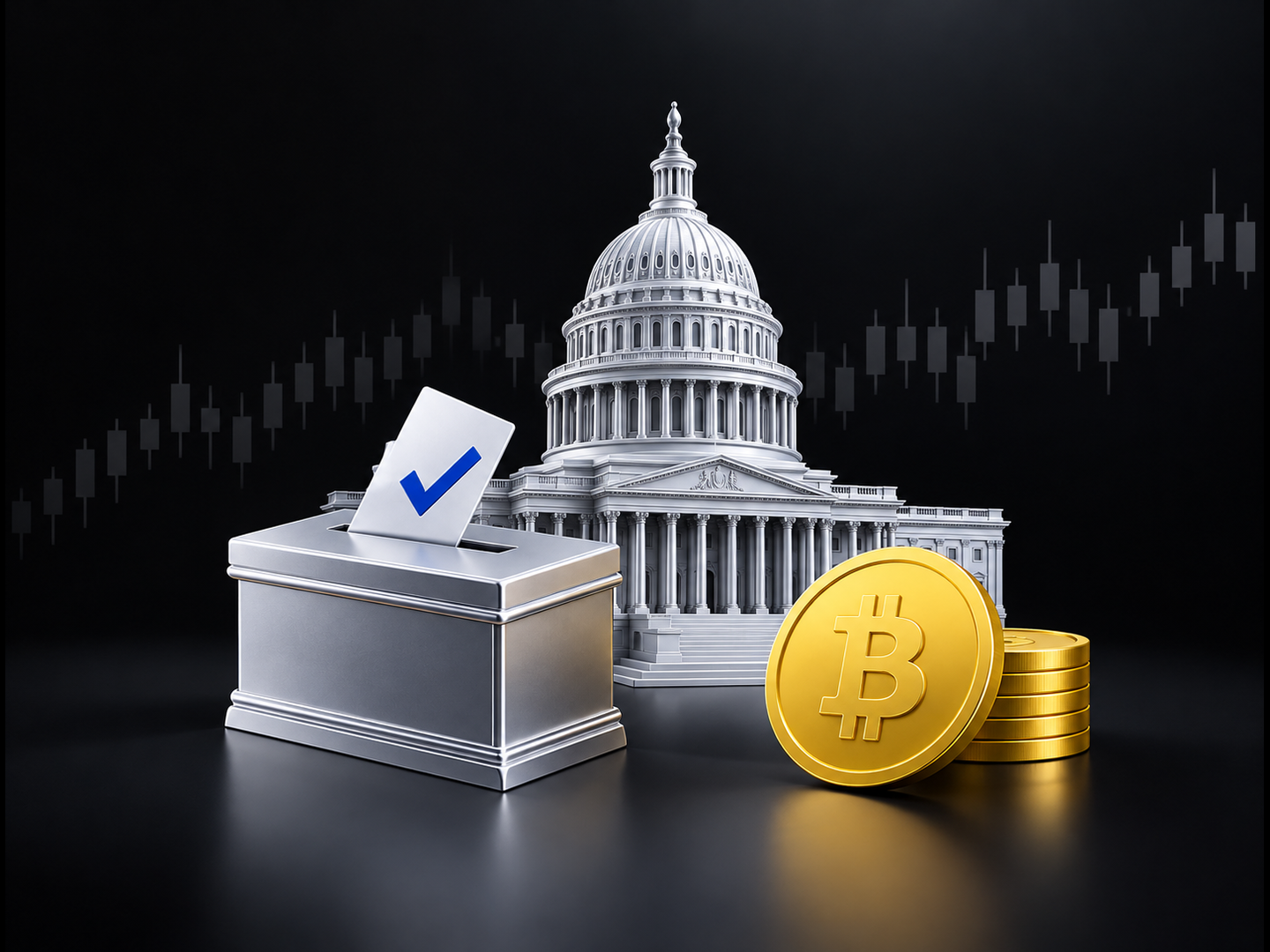
Crypto-linked political action committees injected roughly $176 million into more than 100 congressional campaigns through October 20, 2026, yet prediction markets and nonpartisan forecasters point toward a divided legislature that could subject the digital asset sector to stricter oversight and renewed legislative gridlock. When voters cast ballots in the US midterm elections 2026 on Tuesday, November 3, all 435 seats in the House of Representatives, 35 of the 100 seats in the Senate, and 36 state governorships will be decided.
Capital allocation across equities, fixed income, foreign exchange, and digital assets hinges on whether Republicans retain unified legislative control or Democrats capture one or both chambers. Republicans currently hold a razor-thin majority in the House, where 218 seats are required to govern, alongside a 53 to 47 majority in the Senate, where Vice President Vance holds the tie-breaking vote. For Democrats, flipping the Senate requires a net gain of four seats, whereas capturing the House requires defending their existing base and converting a handful of competitive districts.
Political headlines, however, represent only one variable pricing risk assets this week. Fixed-income and equity desks are simultaneously adjusting to firmer monetary policy expectations ahead of the Federal Reserve Open Market Committee meeting scheduled for December 8 to 9, 2026, where market pricing reflects growing probabilities of an interest-rate hike. Understanding how electoral mechanics interact with regulatory enforcement and macroeconomic tightening is essential for evaluating cross-asset positioning into year-end.
Quantitative election models and real-money prediction contracts have converged on a clear baseline: Democrats are heavily favored to win the House of Representatives, while control of the Senate remains much closer. Headwinds from national sentiment have weighed on the governing party. According to polling aggregation from The Economist, presidential job approval stands at 34% approve against 61% disapprove, a spread that historically pressures incumbent majorities in midterm cycles.
Nonpartisan seat-by-seat ratings reflect that structural pressure in the lower chamber. Analysis published by The Cook Political Report places 220 House seats as leaning or solidly Democratic, already two seats above the 218 threshold required for a majority, while leaving 17 additional House contests rated as toss-ups. By contrast, the Cook Political Report categorizes overall control of the Senate as a toss-up, reflecting a competitive map spanning both traditional swing states and historically Republican-leaning states.
Prediction markets moved sharply toward Democratic probabilities during the final week of October. As of October 28, 2026, event contracts on Kalshi implied a 91% probability of Democratic control in the House and a 65% probability in the Senate. As of October 29, 2026, Senate probabilities for Democrats on Kalshi rose to 68%. By October 30, 2026, market pricing reached near-uniformity across major venues: House probabilities for Democrats stood at 92% on Kalshi and 94% on Polymarket, while Senate probabilities for Democrats stood at 69% on both Kalshi and Polymarket.
| Metric or Platform | House Control Projection | Senate Control Projection | Reference Date / Status |
| Majority Threshold | 218 of 435 seats | 51 seats (or 50 with VP tie-breaker) | Constitutional baseline |
| Current Partisan Balance | Razor-thin Republican majority | 53 Republican, 47 Democratic | Pre-election baseline (Nov 2, 2026) |
| Cook Political Report | 220 seats leaning Democratic (17 toss-ups) | Rated overall as a toss-up | Pre-election nonpartisan rating |
| Kalshi Prediction Market | 91% Democratic probability | 65% Democratic probability | As of October 28, 2026 |
| Kalshi Prediction Market | Not separately revised in note | 68% Democratic probability | As of October 29, 2026 |
| Kalshi Prediction Market | 92% Democratic probability | 69% Democratic probability | As of October 30, 2026 |
| Polymarket Prediction Market | 94% Democratic probability | 69% Democratic probability | As of October 30, 2026 |
Why does a potential split between House certainty and Senate uncertainty matter for institutional portfolios? A divided Congress typically constrains major fiscal expansion or tax code overhauls, shifting the policy transmission mechanism away from broad deficit spending and toward committee-level regulatory oversight and executive rule-making.
Even if exit polls and early returns clarify the trajectory of the House on Tuesday night, the Senate majority rests on seven specific battleground contests: Texas, Maine, Michigan, Alaska, Iowa, Ohio, and Nebraska. Because Democrats must achieve a net gain of four seats to overcome the current 53 to 47 Republican advantage and Vice President Vance's tie-breaking authority, small polling errors or late-breaking shifts across any two of these seven states can alter the institutional balance of the upper chamber.
Market participantsacross North America, Europe, and Asia must also account for procedural timing risk. Polls across the United States close in staggered waves between 6 p.m. and 1 a.m. Eastern Time, which corresponds to 07:00 to 14:00 Beijing time on Wednesday, November 4, and 23:00 to 06:00 Greenwich Mean Time. That window concentrates initial headline volatility during Asian cash trading hours and the European pre-market open.
Final certification of the Senate, however, may not occur on Tuesday night or Wednesday morning. State-level rules governing mail-in ballot postmarks, signature verification curing, and geographical transit from rural precincts (particularly in states such as Alaska) mean that several jurisdictions may continue counting ballots into the following week. During previous cycles with narrow margins, multi-day counting intervals generated elevated implied volatility in index options and sector-specific exchange-traded funds as partial county drops shifted implied control from hour to hour.
No single industry has deployed campaign capital more visibly ahead of the US midterm elections 2026 than the digital asset sector. According to a Reuters review of Federal Election Commission filings, crypto-linked political groups spent approximately $176 million across more than 100 congressional races through October 20, 2026. Of that total, the industry-backed super PAC Fairshake and its affiliated organizations accounted for roughly $150.8 million.
Rather than aligning exclusively with one political party, Fairshake structured its disbursements to construct a bipartisan pro-industry coalition in the lower chamber. Through late October, Fairshake backed 32 House incumbents, split between 19 Republicans and 13 Democrats. That strategy reflects the legislative arithmetic required to move financial regulation through the US Capitol.
The centerpiece of that legislative effort, the CLARITY Act, illustrates the friction between House momentum and Senate procedural hurdles. Recorded legislative tallies on Congress.gov show that the House passed the CLARITY Act in July 2025 by a bipartisan vote of 294 to 134, aiming to delineate jurisdiction between the Securities and Exchange Commission and the Commodity Futures Trading Commission. Yet momentum stalled in the upper chamber when a Senate motion to proceed failed on September 15 by a vote of 49 to 50.
| Legislative or Campaign Metric | Confirmed Figure / Outcome | Policy or Political Implication |
| Total Crypto-Linked PAC Spending | ~$176 million across 100+ races (through Oct 20, 2026) | Elevates industry visibility with lawmakers |
| Fairshake and Affiliate Spending | ~$150.8 million (through Oct 20, 2026) | Represents the vast majority of sector campaign capital |
| Fairshake House Incumbent Backing | 32 incumbents (19 Republicans, 13 Democrats) | Preserves bipartisan voting bloc in the House |
| CLARITY Act House Vote (July 2025) | Passed 294 to 134 | Demonstrates broad lower-chamber support for market structure |
| CLARITY Act Senate Vote (Sept 15) | Motion to proceed failed 49 to 50 | Forces market-structure legislation into the next Congress |
| GENIUS Act Status | Enacted law | Regulates stablecoins regardless of November 3 election results |
| Voter Issue Priority (May Survey) | 1% of 1,000 registered voters name crypto a top issue | Limits electoral mandate for pure deregulation |
While corporate donors view digital asset market structure as an urgent priority, the broader electorate remains focused on macroeconomic fundamentals such as living costs, employment, and healthcare. A May survey conducted by CoinDesk covering 1,000 registered voters found that only 1% identified cryptocurrency as a top voting issue. This divergence explains why campaign advertisements funded by digital asset PACs frequently emphasize general economic innovation or candidate biography rather than token regulation, and why newly elected lawmakers may feel limited constituent pressure to fast-track industry-written bills.
Translating electoral outcomes into regulatory trajectories requires separating laws that are already settled from legislation that must be renegotiated in the 120th Congress. First, stablecoin regulation is insulated from the November 3 ballot. Because the GENIUS Act is already enacted into law, federal standards governing stablecoin issuance, reserve backing, and supervision remain in force regardless of whether Republicans or Democrats control Congress.
Other segments of the digital asset ecosystem face markedly different trajectories depending on the partisan configuration of the House and Senate:
The prospect of a divided Congress and evolving DeFi classification standards has also revived unconfirmed market speculation regarding whether major non-custodial wallet and infrastructure providers might accelerate or alter governance decentralization, including renewed chatter around a potential MetaMask token. Market participants should distinguish clearly between analytical speculation and confirmed corporate developments: there is no official confirmation that a MetaMask token is launching, and the revived debate reflects trader positioning around potential regulatory frameworks rather than announced product news.
Focusing exclusively on ballot counts risks misattributing broader cross-asset repricing. Investors across the United States, the United Kingdom, Canada, Australia, and global financial hubs are simultaneously adjusting to a shifting monetary policy outlook ahead of the Federal Reserve policy meeting on December 8 to 9, 2026. Over recent weeks, expectations for a December interest-rate hike have grown as policymakers evaluate inflation persistence and labor-market resilience.
The transmission mechanism linking monetary policy and the US midterm elections 2026 operates through the US Treasury yield curve and the US dollar:
Consequently, short-term price swings in equities, bonds, or digital assets during the first week of November cannot be attributed solely to congressional race calls. Portfolio managers must evaluate whether yield movements reflect legislative repricing or continuous adjustments to the December FOMC rate path.
Evaluating the US midterm elections 2026 requires distinguishing among confirmed structural realities, emerging macro headwinds, and scenario-dependent policy risks:
Polls for the 2026 US midterm elections close on Tuesday, November 3, 2026, in staggered intervals between 6 p.m. and 1 a.m. Eastern Time, which corresponds to 07:00 to 14:00 Beijing time on Wednesday, November 4. While House control may become clear during overnight US trading, delayed ballot counting in close states could postpone final Senate results into the following week.
Democrats need to win at least 218 of the 435 seats to control the House of Representatives and achieve a net gain of four seats to win a majority in the 100-seat Senate. Republicans enter Election Day holding a narrow House majority and a 53 to 47 Senate majority, where Vice President Vance breaks ties.
A Democratic victory in either chamber would require a new bipartisan compromise to pass the stalled CLARITY Act, whereas the GENIUS Act is already enacted law and regulates stablecoins regardless of the election outcome. The House passed the CLARITY Act 294 to 134 in July 2025, but a Senate motion to proceed failed 49 to 50 on September 15.
Debate over how a divided Congress might regulate decentralized finance protocols under a revised market-structure bill has revived trader speculation regarding whether infrastructure providers might pursue governance tokens, including a potential MetaMask token. No official announcement confirms that a MetaMask token is planned, and market commentary on the topic remains unverified speculation rather than confirmed corporate news.
Rising market expectations for a Federal Reserve interest-rate hike at the December 8 to 9, 2026 policy meeting act as an independent macroeconomic driver that can outweigh congressional election headlines across bond, equity, and currency markets. Higher policy rates increase borrowing costs and discount rates globally, meaning post-election asset moves will reflect both legislative shifts and monetary tightening.
Market participants navigating the aftermath of the US midterm elections 2026 face a two-stage calendar over the next five weeks. In the immediate term, traders will track certified vote margins across the seven decisive Senate states (Texas, Maine, Michigan, Alaska, Iowa, Ohio, and Nebraska) alongside incoming leadership announcements for House financial and oversight committees. Once congressional composition stabilizes, institutional attention will pivot rapidly toward macroeconomic data releases feeding into the December 8 to 9 Federal Reserve meeting, where rate-hike probabilities and liquidity conditions will set the baseline for cross-asset performance heading into 2027.

The OCC stablecoin rule is finalized. Analyze the GENIUS Act final rule, stablecoin issuer requirements, rewards scrutiny, and the January 2027 effective date.
Read article
Explore an institutional analysis of the CLARITY Act stall, SEC innovation exemptions, CFTC rulemakings, and structural crypto market risks.
Read article
How could an arithmetic error threaten the 100B XRP supply cap? Learn how researchers identified the XRPL payment flaw before anyone could exploit it.
Read article
The CLARITY Act failed Senate advancement. Analyze why the crypto market structure bill fails, the market's "shrug it off" reaction, and the new regulatory pivot.
Read articleDisclaimer: This article is provided for informational and educational purposes only and does not constitute financial, legal, or investment advice. It contains no buy/sell recommendations of any kind. Readers should conduct their own research and consult a qualified professional before making any financial decisions.